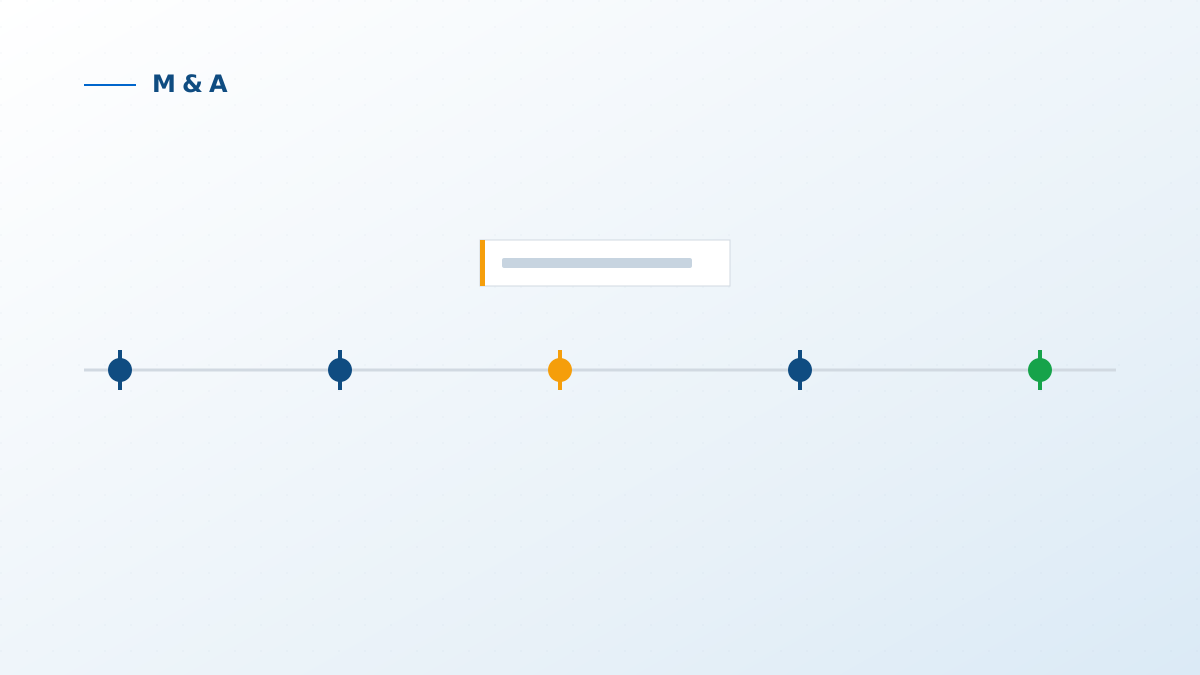
Selling a company is not a single event. It is a process that usually runs four to nine months and moves through a recognizable set of stages. If you have never been through it, the sequence can feel opaque. Here is what actually happens, start to finish, and where the real work and the real risk sit.
Stage 1: Preparation and positioning
Before anyone talks to a buyer, a seller and their advisor get the house in order. That means clean financials, a clear growth story, and a sense of what the business is worth. Many sellers commission a sell-side quality of earnings here to document their EBITDA add-backs and get ahead of the questions a buyer will eventually ask.
Stage 2: Marketing and first contact
The advisor approaches potential buyers with a short, anonymous teaser, then a fuller confidential information memorandum once a non-disclosure agreement is signed. Interested buyers respond with an indication of interest, a preliminary view of value. Sellers benchmark these against a comparable company analysis to see who is serious.
Stage 3: Management meetings and the LOI
Promising buyers meet management, ask questions, and refine their offer. The strongest buyer submits a letter of intent, which sets the price and structure and, crucially, grants exclusivity. Once an LOI is signed, the seller stops talking to other buyers and the clock starts on diligence.
Stage 4: Due diligence
This is where deals are made or unmade. The buyer commissions a quality of earnings analysis, digs into customer contracts and customer concentration, and reconciles the books to the bank with a proof of cash. Everything happens inside a data room. If diligence surfaces problems, the buyer may re-trade the price agreed in the LOI.
Stage 5: The purchase agreement
In parallel, lawyers draft the definitive agreement. This is where the deal’s risk is allocated: the asset or stock structure, the seller’s representations and warranties, the escrow, and the working capital peg that will true up the price at close.
Stage 6: Financing and structure
If the buyer is using a leveraged buyout structure, lenders complete their own diligence and commit the debt. The final structure often includes rollover equity from the seller, a seller note, or an earnout to bridge any remaining gap on value.
Stage 7: Closing and beyond
The parties sign, funds move, and ownership transfers. After close, the working capital true-up is finalized, the purchase price allocation is set for tax and accounting, and the escrow period begins to run. The deal is done, but the relationship, especially if the seller rolled equity, is just beginning.
Where Zenith fits
The diligence stage is the longest and most failure-prone part of this timeline, and it is exactly where Zenith helps. We generate an investment-bank-grade due diligence workbook, EBITDA bridge, and per-recipient data room in about a minute, whether you are a buyer running diligence or a seller getting ahead of it.
See how the diligence workbook works or browse the full finance glossary.